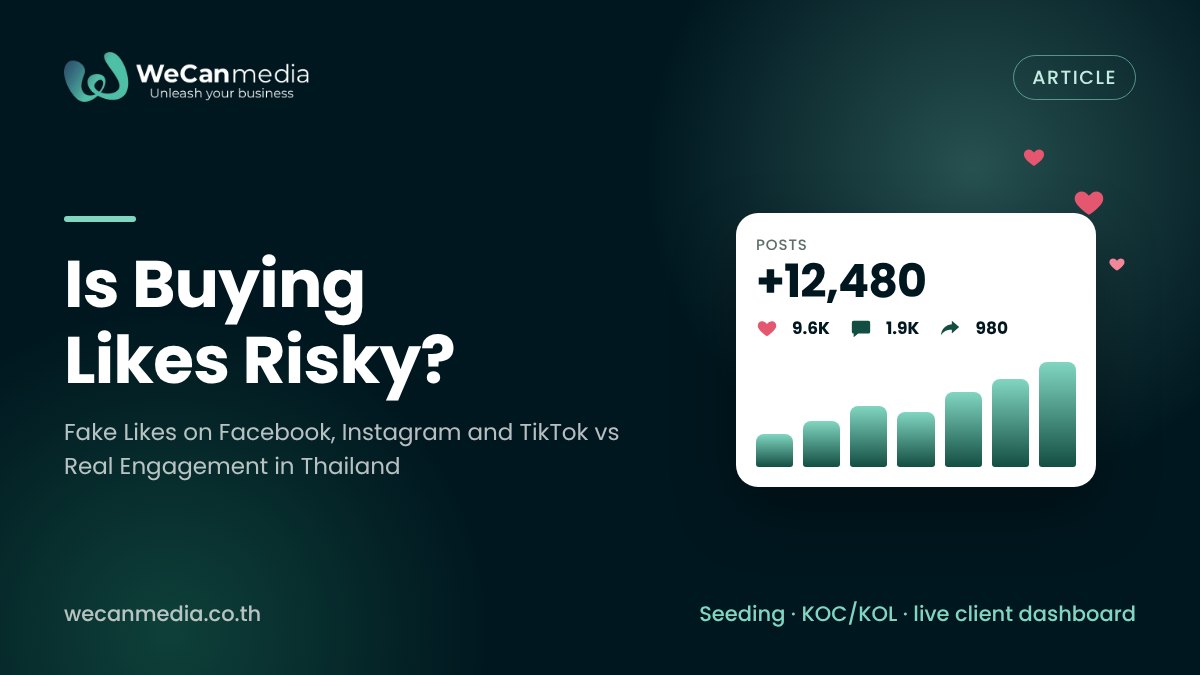
Like pumping (ปั๊มไลค์) means buying likes from bots or fake accounts so a post or page looks popular. It is cheap or free and the number jumps at once, but nobody is behind those likes: no comments, no purchases, and more harm than good. Here is why, and what brands should do instead.
Key takeaways
Bought likes on Facebook, Instagram and TikTok come from bots or fake accounts, and platforms detect and remove them.
Fake likes lower a page's engagement rate, so later posts are shown less.
Algorithms weigh comments, shares, saves and watch-through, not like counts.
What works is engagement from real people in Thailand who care about the category.
How like pumping works
Like sites use batch-created accounts, hijacked accounts, or like-exchange apps. Hundreds of likes land within minutes from accounts with no photo or friends, often from abroad. “Free likes” usually cost you your password or account access, which risks losing the account.
Why it hurts
- Engagement rate collapses. A page padded with fake followers or likes has a lower share of real interaction, so the platform shows its next posts less
- Removal and limits. Platforms purge fake likes and accounts; what you paid for can vanish, and repeat offenders risk reduced visibility
- Customers can tell. 2,000 likes and no comments, or a list of likers who are all foreign names, costs credibility
- Ad data is skewed. Ads built on a page with fake followers learn the wrong audience
- No sales. Bots don't buy
How to spot fake likes
- Many likes, almost no comments or shares (comments under 0.4% of likes is a warning)
- Likes arrive in one burst and then stop
- The liker list shows no-photo accounts, odd names, or countries outside your market
- Large swings between posts: thousands on one, tens on the rest
Before hiring a creator, type their username into our free engagement rate checker. It compares them with Thai benchmarks and flags unusual patterns.
7 ways to grow likes and engagement from real people
- Post when followers are online and answer comments in the first hour, when the platform decides whether to spread the post
- Ask easy questions. Voting posts earn more comments than sales posts. See 7 post formats
- Make things worth saving or sending: lists, how-tos, before and after
- Facebook: aim for comments that are real conversation and shares into relevant groups
- Instagram: aim for saves and shares to Stories, which help reach Explore
- TikTok: hook in the first 3 seconds and hold to the end. Comments and shares matter more than likes
- Use engagement seeding from real people: KOCs who care about the category comment, ask, answer and share in the first hour so the post starts with a conversation. Read the first 8 comments
Like pumping vs real engagement
| Like pumping | Engagement seeding from real people | |
|---|---|---|
| Who likes | Bots, fake or foreign accounts | Real people in Thailand with normal accounts |
| Rhythm | One burst | Arrives naturally over time |
| Comments and shares | None, or repeated emoji | Comments that make sense, shares into relevant groups |
| Evidence | A number on the post | Before-and-after numbers for every post in a dashboard |
| Price | Very cheap or free | Higher, because real people are paid |
| Effect on the page | Lower engagement rate over time | Posts carry conversation and travel further |
See our likes and engagement from real people in Thailand service.